
Growing your business beyond the startup phase means making some big changes with regard to how your company operates. In a startup, it’s an all-hands-on-deck situation for the close-knit team; communication is a breeze because the company isn’t a sprawling organisation yet and at any given moment you, the founder, can be found jumping between roles, keeping tight control over everything.
However, as you scale up, it quickly becomes apparent that the advantages that made you a startup success could now be the very things that are holding you back. The small team needs to grow so you can keep up with demand and remain competitive, it’s no longer efficient for you to be the last one to sign off on everything and each department in your company needs to start regulating themselves.
As you figure out how to navigate this evolution of your business, there will be a big question that you’ll have to answer early on, and that is “Should we outsource, or should we keep everything in-house?” We’ve narrowed down the primary determinants when considering this question to 1) Expertise, 2) Cost, 3) Time, and 4) Control. In this blog, we’re going to look at the pros and cons concerning each to help you decide which is the best solution for you.
The pros and cons of outsourcing vs keeping it in-house
Expertise
Your business has a core skillset that allows you to offer certain products and services in the marketplace, so it makes sense to keep these types of skills in-house. However, when it comes to other areas – such as marketing, IT, accounting, or recruitment – you may find your team is lacking. You can hire individuals with these skills, but how many people will you need and at what level of experience? Do you have the right knowledge to be able to recruit the correct individuals for the role?
One of the main advantages of outsourcing is that you get immediate access to a team of specialists highly skilled in their area. Rather than hiring someone who knows just a thing or two about IT, for example, outsourcing provides you with technology experts dedicated to getting you results. On the other hand, you may prefer growing your expertise from the inside so you can ensure you have your own stamp on every project while also learning from experiences.
Cost
Outsourcing is by far the more cost-effective solution when compared to an in-house option. The outsourced agency doesn’t require benefits, training, space, tools, holiday pay, or a Christmas bonus. You don’t have to waste resources on a recruitment process, and instead of paying a salary, you only pay for hours worked or input received. Some will say that this doesn’t matter if there is a loss in quality, which can happen when you give an outside source control over an aspect of your business. However, this is simply a matter of doing your due diligence before choosing which outsourced agency or consultant to partner with.
Time
One of the primary motivations for outsourcing is because it gives you more time to focus on your business. Many hours can be eaten up trying to get to grips with financial budgets, marketing analytics, or troubleshooting technical difficulties if these are not your areas of expertise. However, you will only save time by outsourcing if you have good communication channels available.
There are four main reasons why working with an outsourced company can prove problematic if communication is a problem:
- Projects slide because you’re not used to working with people remotely.
- Project briefs are not clear enough, therefore resulting in inaccuracies and multiple revisions.
- You haven’t built up a proper level of trust with your outsourced agency and end up spending a lot of time micromanaging their work.
- You and your outsourced agency are working in different time zones.
However, it is worth noting that most of these problems can occur with bad in-house time management as well. Employees working from home can become isolated from their team, vague briefs can result in mistakes, micromanaging employees can take up a lot of time and, if you have expanded internationally, you may find your team is working across different time zones. The lesson here is to find a way to improve those communication channels early on in your business’s progression, whether you choose to outsource or not.
Control
Working with an outside firm is often viewed as a partnership rather than an employment situation. Therefore, instead of having ultimate control over employee work processes, determining how you prefer things to be done from start to finish, you have a situation in which you hand over a project to a team of experts in another company and they get you results their way. Of course, you will be able to specify certain details, such as how many leads you want, the budget, the expected outcome, etc., but the core impulse behind outsourcing is that you recognise the agency to be more experienced than you in a certain area and that is why you are willing to hand over control to them. You have to decide whether this is something you are happy to do when deciding to outsource a service or keep it in-house.
Scaling up? Enterprise Ireland provides funding for established SMEs in areas such as developing your management team, market research and internationalisation, developing your management team, productivity and business process improvement, as well as company expansion. Find out more on their Established SME funding page.
About the author

Scarlet Bierman
Scarlet Bierman is a content consultant, commissioned by Enterprise Ireland to fulfil the role of Editor of the New Frontiers website. She is an expert in designing and executing ethical marketing strategies and passionate about helping businesses to develop a quality online presence.
Recent articles

Rekha Jonnala’s Startup, PRIJYM, Is Transforming Lab Ops With A Unified Compliance Platform

Corina Popov Is Making Tax Digital For Sole Traders Across The EU
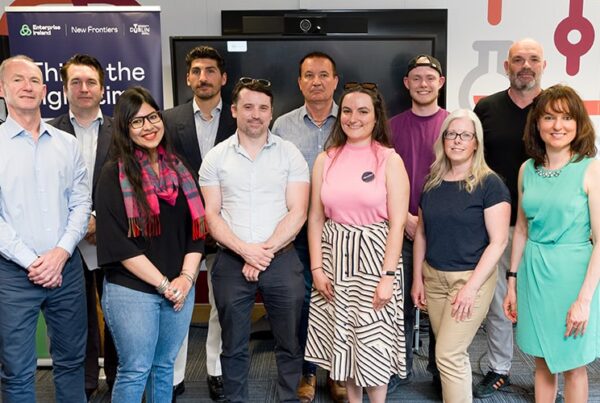
Eight Startup Founders Graduate From Phase 2 Of New Frontiers At TU Dublin
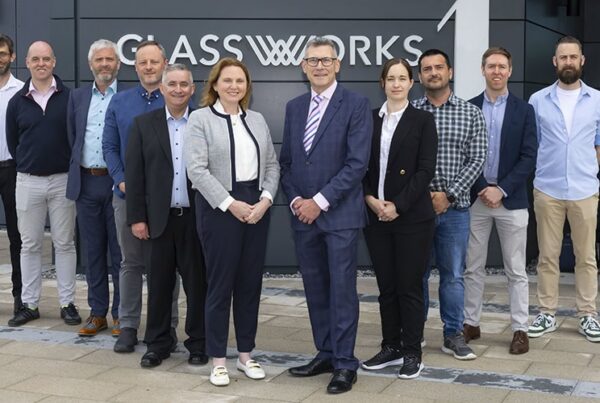
10 Ambitious Founders Celebrated At The New Frontiers Waterford Showcase Event

Cork Showcase Event Celebrates The Achievements Of The Latest Phase 2 Cohort

Shane Doherty On Leaving Life Insurance To Build A Hotel Revenue Management System

A Cohort Of Ambitious Entrepreneurs Graduates From New Frontiers In The Midwest